Is SEO Dead? How AI Search Is Changing Google SEO in 2026
By Matthew Ward, Founder and Director29 September 2026
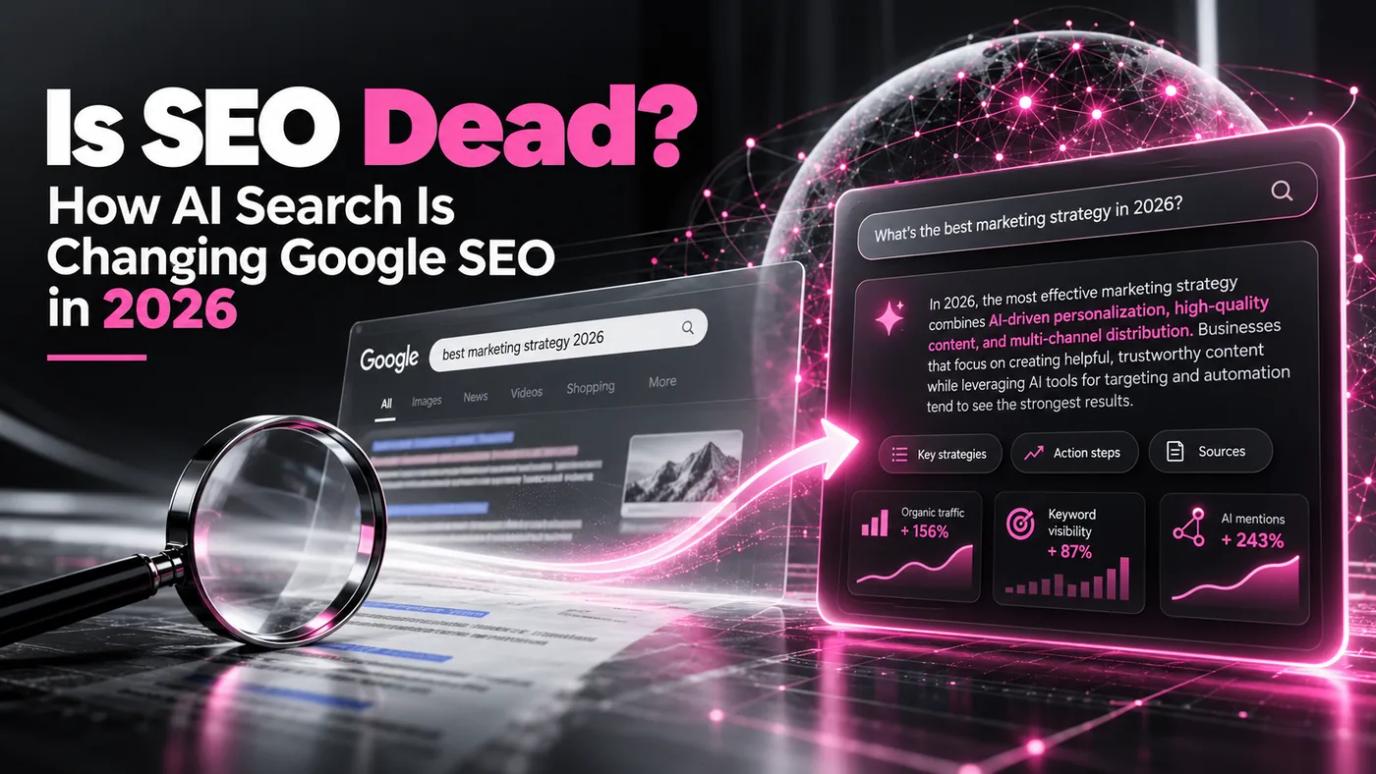
"Is SEO dead?" gets searched constantly.
It normally follows the same pattern. AI Overviews appear at the top of Google. ChatGPT and other AI tools answer questions directly. Traffic numbers on some websites drop. Someone declares SEO is finished.
The short answer is no, SEO is not dead. The slightly longer answer is that SEO is changing shape, and businesses that only measure success through click volume are the ones most likely to feel like something has broken.
SEO isn't dead in 2026. AI Overviews and AI chat tools have changed where people find answers and how visibility should be measured, but they still rely on clear, useful, well structured content to draw from, which is exactly what good SEO produces.
What has actually changed in search
The biggest visible shift is Google's AI Overviews, AI-generated summaries that can appear above traditional search results for many queries.
Google has confirmed that AI Overviews now have more than 2.5 billion monthly users, and it continues expanding them into more countries and query types.
Separately, tools such as ChatGPT, Google's Gemini, Microsoft Copilot and Perplexity are increasingly used as first-touch places for research, questions and comparisons, not just traditional search engines.
This creates two real, connected effects for businesses:
- Some searches now get partially or fully answered on the search results page itself, or inside an AI chat interface, without the user needing to click through to a website.
- Business visibility increasingly depends on whether AI systems and Google itself find your website informative enough to reference at all.
Is Google traffic actually declining?
This depends heavily on the industry, the type of query and how a business measures traffic.
Industry research tracking clicks and impressions across millions of searches found that click-through rates fell on queries where AI Overviews appeared. However, the same research noted that impressions, meaning simply appearing in search, in some cases increased, since AI Overviews can sit above additional traditional results.
In other words, businesses are not uniformly losing visibility. Many are seeing a redistribution: fewer raw clicks on certain informational queries, but continued or new visibility through appearing as a cited or referenced source within AI-generated answers.
This is a genuinely important distinction. A decline in one specific traffic metric is not the same thing as a decline in overall business visibility or commercial opportunity.
Which types of searches are most affected
Not all searches behave the same way under AI Overviews and AI search tools.
Purely informational queries, things like simple definitions, conversions or general explanations, are the most likely to be fully answered without a click.
Commercial, comparison and decision-stage queries behave differently. A business asking "how much does a freelance marketer cost" or "should I hire a freelancer or agency" is still highly likely to want to visit an actual website, compare real options and take an action such as making contact.
This matters because it means SEO strategy in 2026 should weigh informational content differently to commercial, decision-stage content, rather than treating every keyword the same way.
Why "SEO is dead" is the wrong framing
Search engines still need to understand, index and rank content. AI tools still need reliable, structured, trustworthy information to draw from when generating answers.
Google's own guidance continues to emphasise the same underlying principles it has recommended for years, helpful content, genuine expertise, clear structure and original value, now explicitly applied to how content performs in AI-powered search experiences as well as traditional results.
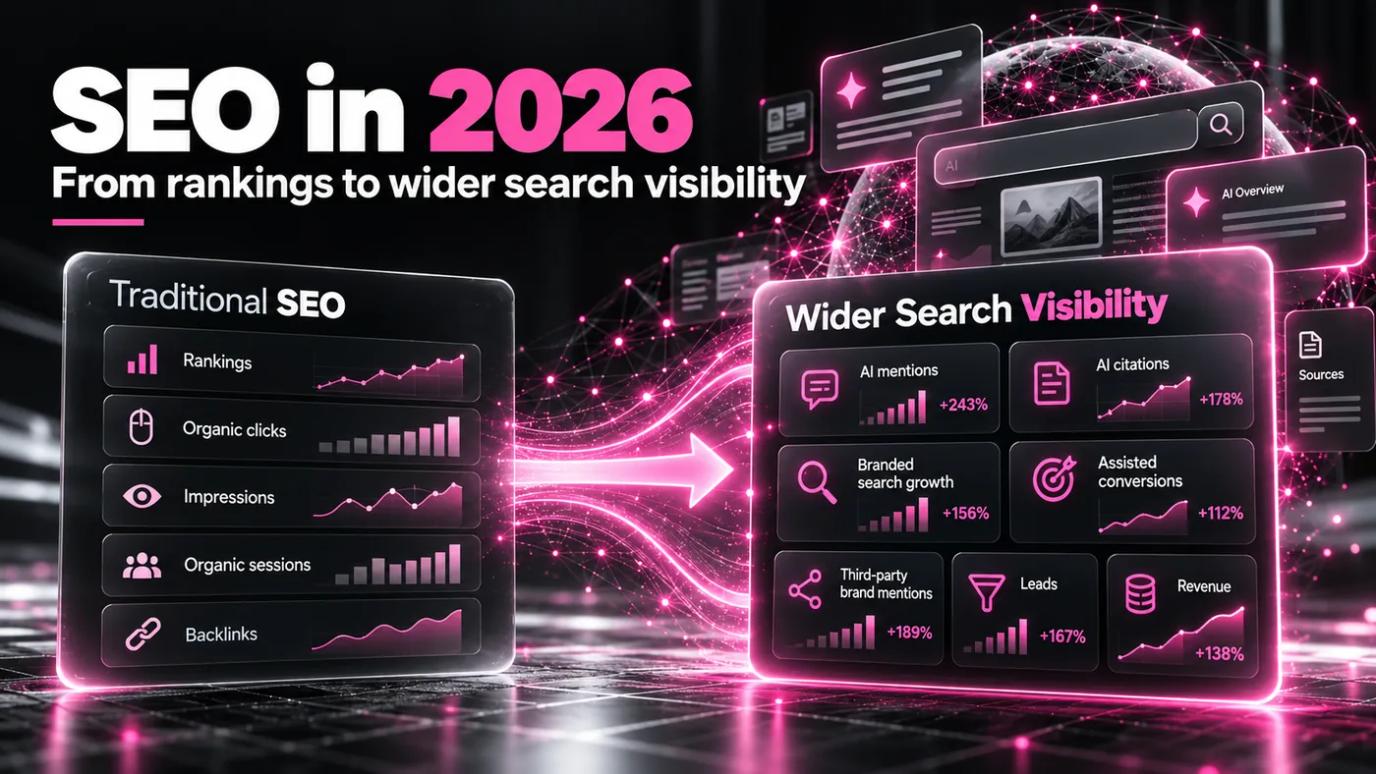
What has changed is not whether these fundamentals matter, but how visibility gets measured and where the "moment of discovery" now happens.
What businesses should actually do in 2026
1. Stop measuring success by clicks alone
Track whether your business appears as a cited source in AI Overviews and AI chat answers, not only whether someone clicked through. Where available, review Search Console impression data alongside click data to see the full picture, not just part of it.
2. Prioritise genuinely useful content over generic content
Google explicitly continues to reward original, first-hand, genuinely useful content over recycled or purely keyword-driven material. This includes real examples, direct experience and information that goes beyond a basic definition.
3. Structure content clearly
Clear headings, direct answers near the top of a section, and logical formatting help both traditional search engines and AI tools understand and extract your content accurately.
4. Focus commercial content on genuine decision-making
For queries where someone is close to making a decision or purchase, ensure your website answers the real questions involved, cost, process, credibility, and next steps, clearly and directly.
5. Build topical depth, not isolated pages
Businesses with a cluster of genuinely useful, interlinked content on a subject tend to be viewed as more authoritative than a business with a single, isolated page on the same topic.
Does SEO still deliver a return?
Yes, but the definition of "return" needs to include more than raw click totals.
A business that appears prominently in an AI-generated answer, even without an immediate click, is still building brand visibility and trust. A business that ranks well for commercial, decision-stage searches is still generating genuine enquiries. Both of these are real commercial outcomes, not vanity metrics.
The businesses most likely to say "SEO doesn't work anymore" are often the ones still measuring success exactly the way they did five years ago, using only one traffic metric while ignoring the wider ways visibility now happens.
How Lead Kinetics can help
Businesses don't need to abandon SEO in 2026, they need it approached properly, with a clear understanding of how AI search actually works and what it means for real commercial outcomes.
Lead Kinetics provides access to freelance marketing specialists with genuine, current experience across SEO, content and AI search optimisation, matched to what your business actually needs. If you'd like to talk through where your own search visibility stands, get in touch with our team.
Frequently asked questions
Is SEO still worth doing in 2026?
Yes. SEO remains one of the most effective ways to build long-term visibility, particularly for commercial and decision-stage searches. What has changed is that success should be measured across both clicks and AI-generated visibility, not clicks alone.
Has AI replaced the need for SEO?
No. AI tools and AI Overviews still rely on well-structured, genuinely useful, indexable content to generate accurate answers. Strong SEO fundamentals are what make a website more likely to be referenced by these systems.
Why has my website traffic dropped since AI Overviews launched?
Some informational queries are now partially answered directly within AI Overviews, which can reduce clicks for purely informational content. This does not necessarily mean your overall visibility has declined, particularly for commercial and decision-stage searches.
What should businesses focus on for SEO in 2026?
Genuinely useful, well-structured, original content, clear answers to real questions, and a measurement approach that includes AI-generated visibility alongside traditional click data.
today to connect with trusted UK freelancers and build a marketing team that delivers.